Consider any linear transformation M, which we will apply to our square. If we are allowed to rotate our square before applying M, then we can find a rotation such that, by first applying the rotation and then applying M, we transform our square into a rectangle. In other words, if we rotate the square before applying M, then M just stretches, compresses, or flips our square. We can avoid our square being sheared.
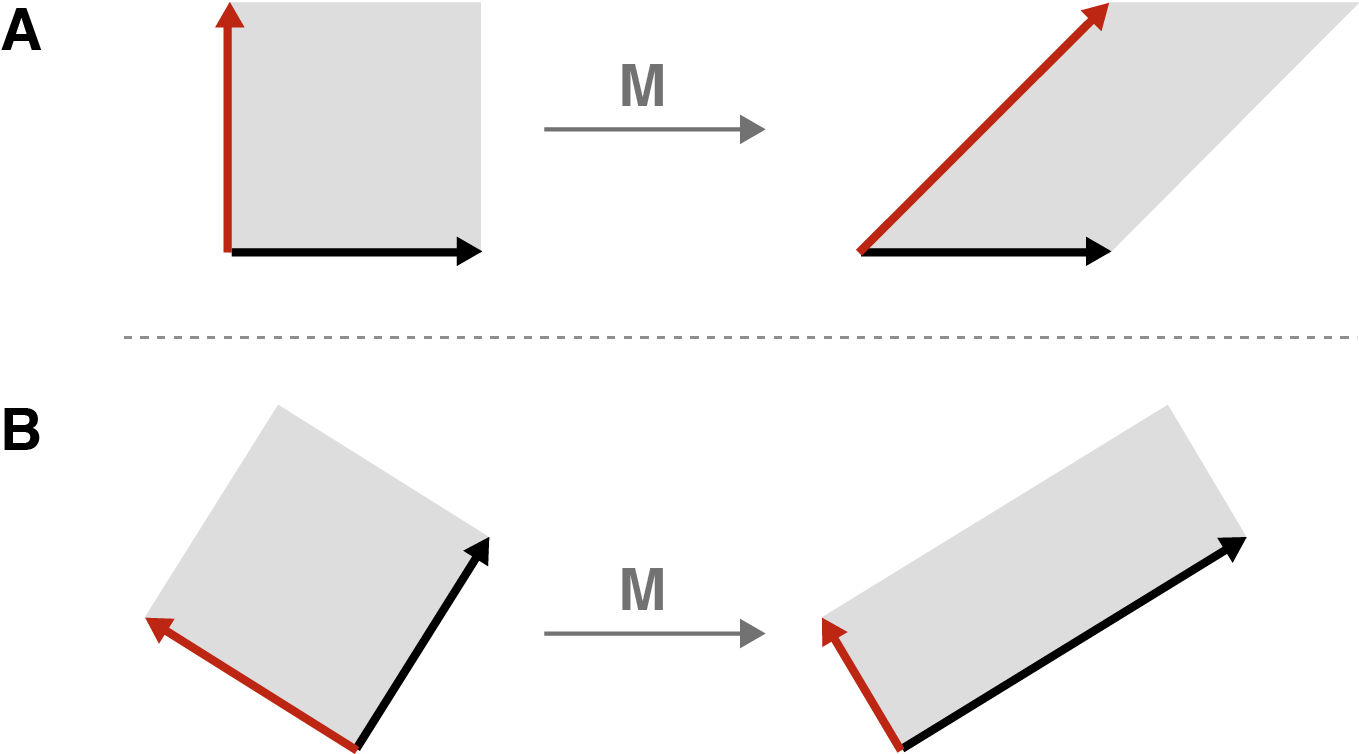
This is the essence of SVD. The singular values referred to in the name “singular value decomposition” are simply the length and width of the transformed square, and those values can tell you a lot of things. For example, if one of the singular values is 0, this means that our transformation flattens our square. And the larger of the two singular values tells you about the maximum “action” of the transformation.
2025/10/07